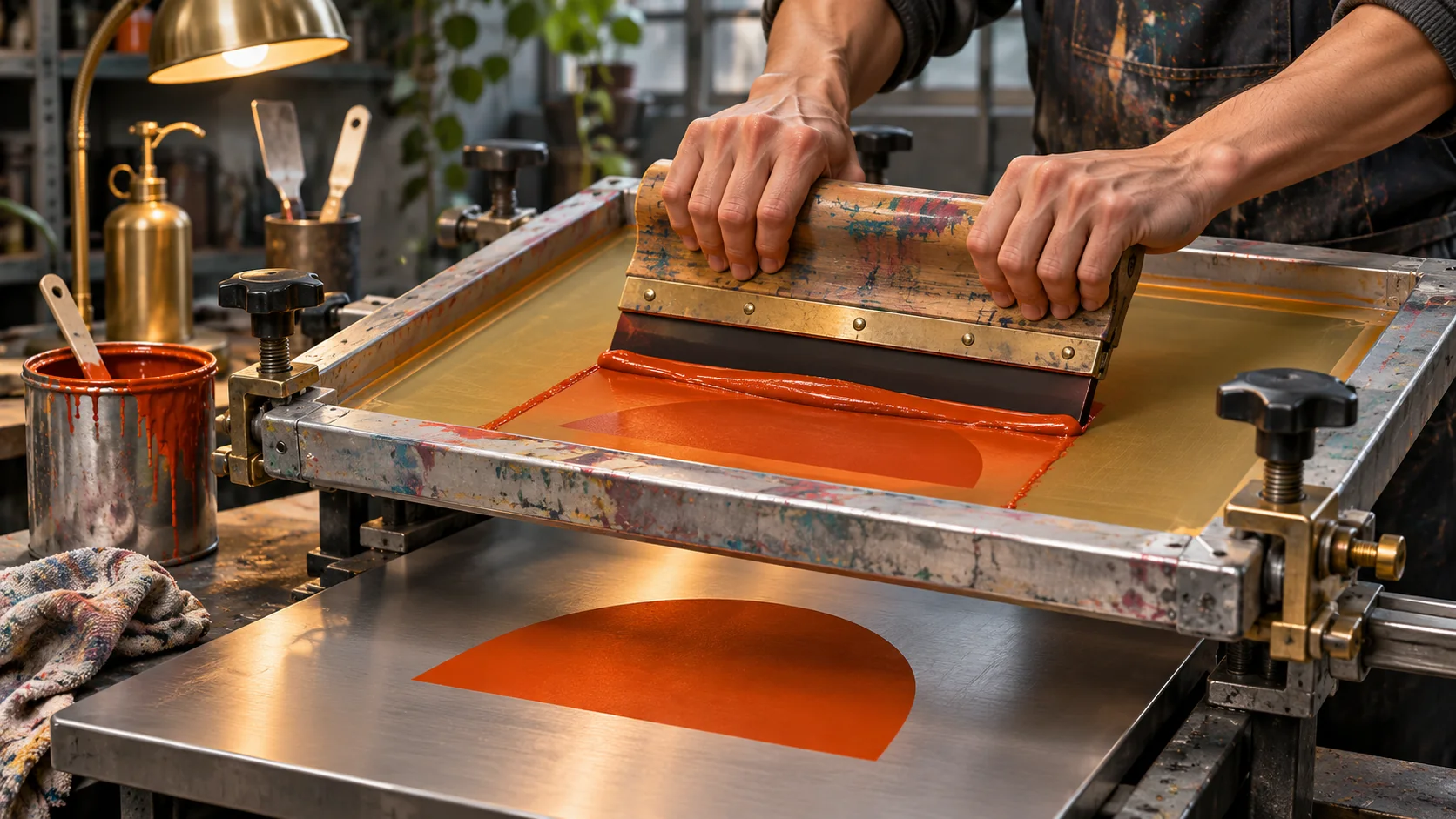
Screen printing transfers ink through open areas of a mesh screen with a squeegee. It can be considered for flat and suitable cylindrical products; material, shape and preparation must be assessed for each job.
What do the screen and squeegee do?
Open areas of the screen form the image. The squeegee helps ink pass through them. Artwork detail must be considered alongside the mesh and ink system.
Flat versus round products
Supporting a flat panel differs from holding and moving a cylindrical bottle or tube. Diameter, print length and artwork position matter for round products, and suitable fixtures must be considered.
Surface and ink selection
Glass, metal, coated parts and plastics need different preparation. Polyethylene and polypropylene may require suitable pretreatment. Follow the ink manufacturer’s technical data and test on the actual product.
Before production
Share the material, coating, print area, colours, quantity and target date. For round parts include the diameter and artwork position. Discuss abrasion or chemical resistance before approving a sample.
Choosing equipment
Compare the actual artwork position with the print area, then consider the screen frame, fixture, air and electrical requirements and changeover work.
Let’s assess the right method for your product
Share the material, print dimensions and quantity to discuss suitable equipment or printing services.
Contact us