
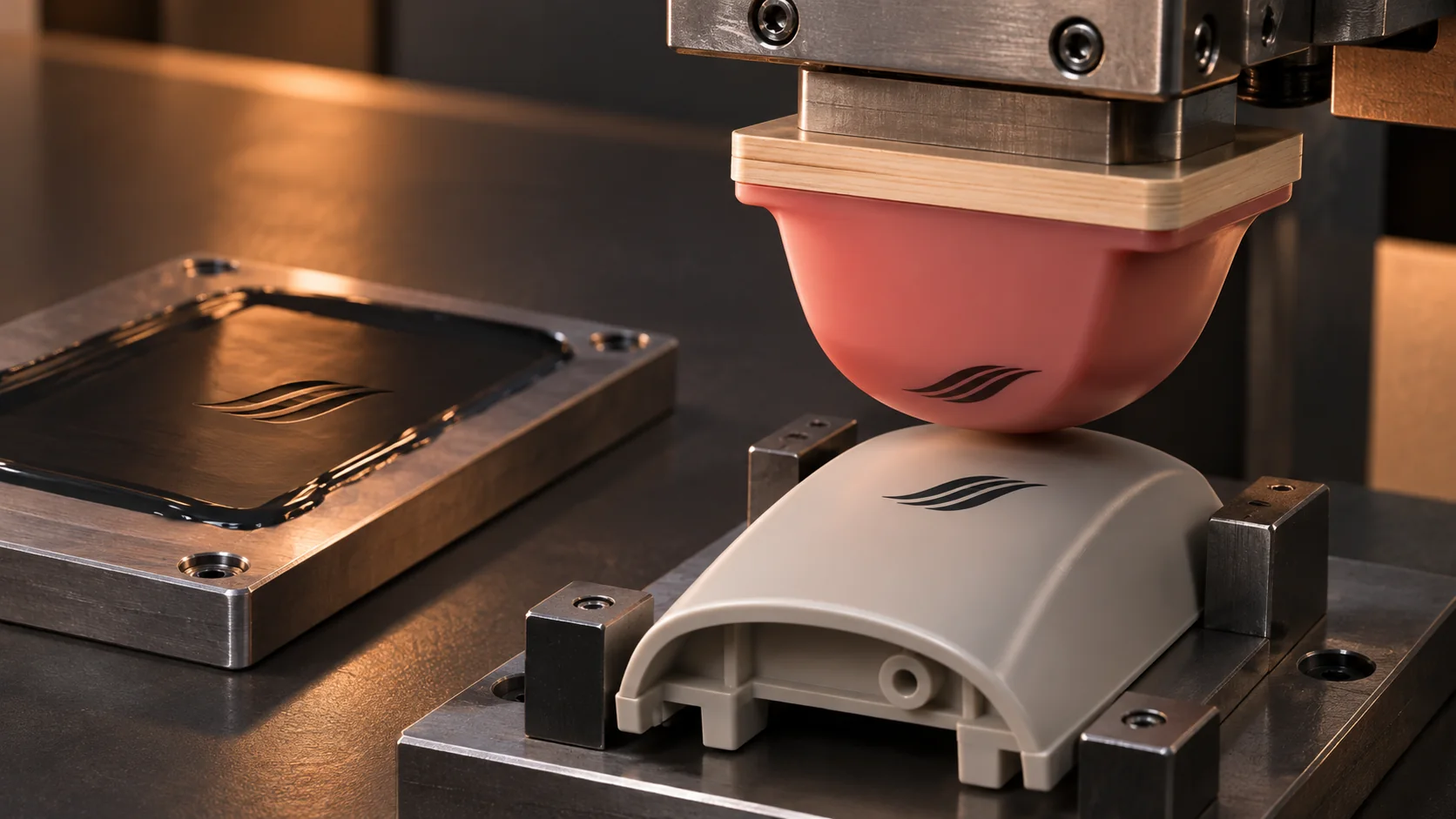
Pad printing is an indirect process that transfers an image from a plate to a product using a flexible silicone pad. It can be useful for small or shaped parts, but suitability also depends on material, print area and ink.
How does the process work?
Ink fills the image area on the plate. The silicone pad picks up the image and transfers it to the product. The fixture, pad shape and plate preparation all matter for repeatable results.
Which products can be considered?
Pens, buttons, small plastic parts and some curved housings are examples. Different plastics and coatings do not necessarily behave alike. Share the exact material and any known surface treatment.
One colour or multiple colours?
Each colour requires separated artwork and accurate positioning. Fine lines, small text and colour junctions should be assessed using a real sample.
What should you prepare for a quote?
Share a photo or sample, the print location and dimensions, number of colours and approximate quantity. If possible, provide vector artwork at actual print size and describe expected wear and chemical contact.
Ink and durability
Surface preparation, ink selection and drying or curing conditions must be considered together. Follow the ink supplier’s technical data and arrange a representative sample test before making durability claims.
Let’s assess the right method for your product
Share the material, print dimensions and quantity to discuss suitable equipment or printing services.
Contact us